The $38,500 Car That’s Beating $10,000 Competitors
Tesla just outsold every vehicle in China. Every EV. Every hybrid. Every gas car. At 3-4x the price.

Andy Swan
April 14, 2026
A $38,500 vehicle just outsold every car in China. Every EV. Every hybrid. Every gas car. Every sedan, crossover, and minivan.
Not in a niche segment. Not in a luxury category. Overall. Number one.
The Tesla (TSLA) Model Y sold 39,827 units in March... in a market flooded with vehicles that cost a quarter of the price.
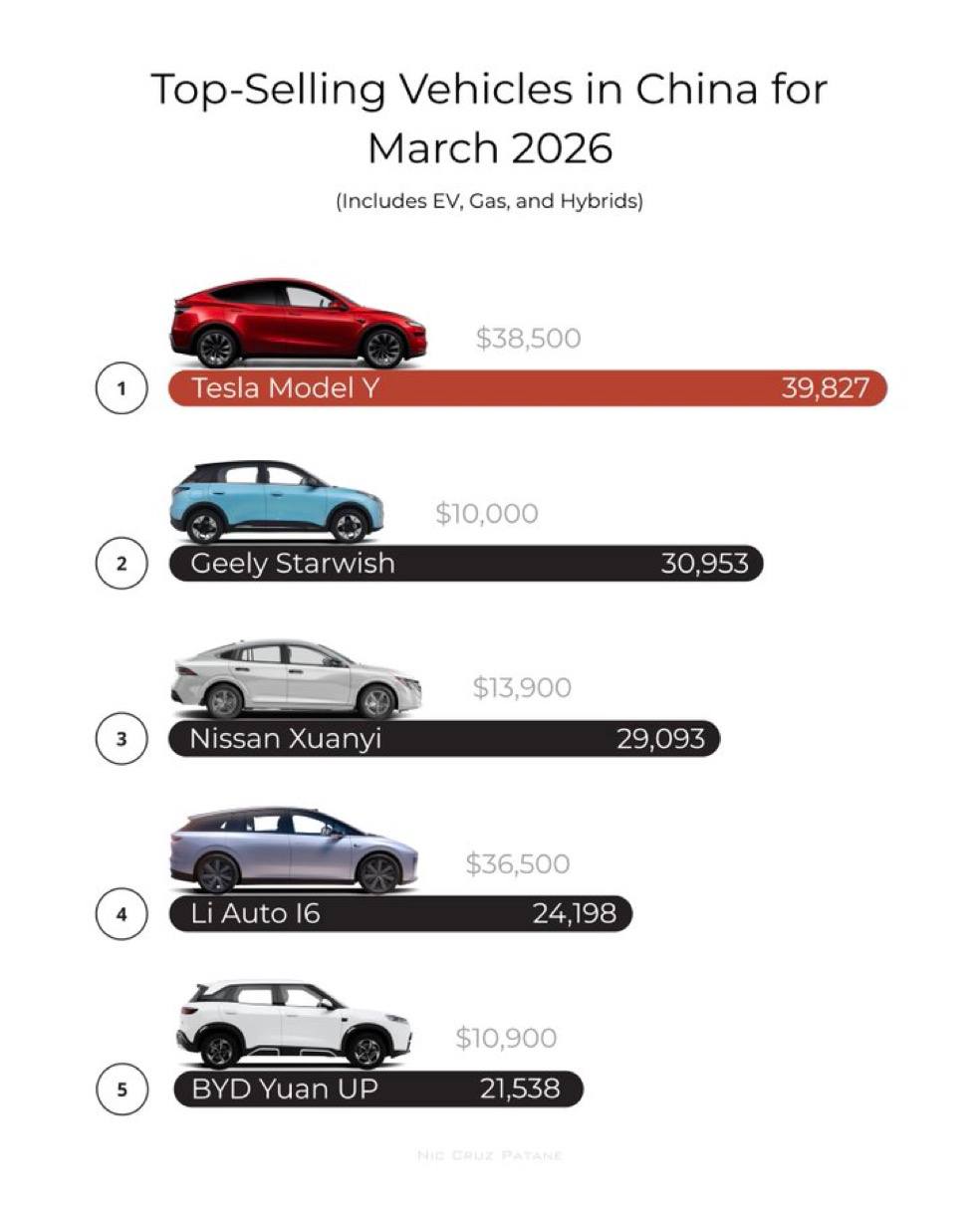
Read those prices again.
The Geely Starwish... number two... costs $10,000. The Nissan Xuanyi... number three... $13,900. The BYD Yuan UP... number five... $10,900.
Tesla costs 3-4x more than the competition. And it won.
That’s not a sales report. That’s a consumer verdict.
Why This Matters More Than You Think
JPMorgan told you last week that Tesla stock could fall 60%. Bears have been pounding the "China competition" narrative for two years. BYD is crushing it. Xiaomi launched a car. Dozens of $10,000 EVs are flooding the market.
And consumers chose the $38,500 Tesla anyway.
This is the data point that breaks the bear thesis. Not because Tesla is cheap. Because Tesla is expensive... and winning. In the most competitive auto market on Earth. Against rivals that cost less than a used Honda Civic in America.
And It’s Not Just China
While Tesla was taking the top spot in China, something equally important was happening back home.
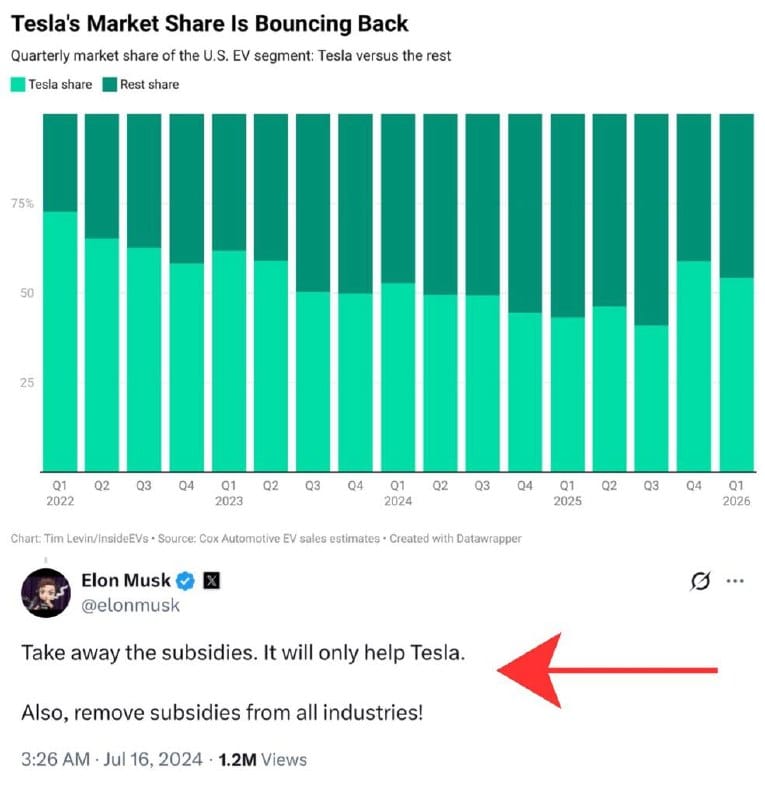
Tesla’s U.S. EV market share jumped from 43.2% to 54.2% year over year in Q1 2026. After quarters of "Tesla is losing share" headlines... the trend reversed. Hard.
What changed? The $7,500 EV tax credit got pulled. Musk called it in July 2024: "Take away the subsidies. It will only help Tesla."
He was right. The subsidy removal was devastating for competitors who depended on it to make their EVs price-competitive. Tesla doesn’t need a government handout to sell cars. The others did. And now the data proves it.
Winning in China at 3-4x the price. Gaining share in the U.S. without subsidies. That’s not one data point. That’s a pattern.
The Flywheel Nobody Talks About
Every Model Y sold does something its $10,000 competitors cannot. It feeds data back to Tesla’s Full Self-Driving system.
Tesla just released FSD v14.3... codenamed "Sentient"... a complete AI rewrite from the ground up. The company is pursuing full FSD approval in China. Musk said he expected regulatory clearance by early 2026.
39,827 Model Y’s on Chinese roads in March alone. Each one collecting driving data. Each one training the neural network. Each one making the next version of FSD better.
More cars sold... more data... better AI... more cars sold.
BYD can sell a $10,000 car. They cannot replicate a data flywheel built on hundreds of millions of miles of real-world driving across 50+ countries. That moat gets wider with every vehicle sold.
The Q1 Earnings Setup
Tesla reports Q1 earnings on April 22. Nine days from now. The same day the Iran ceasefire expires.
Wall Street is expecting weakness. Q1 global deliveries missed consensus. The headline number looked soft. But underneath that headline...
Total China retail sales in March rebounded 47% from February. Shanghai Gigafactory wholesale shipments hit 85,670 units, up 8.7% year over year. Exports from Shanghai hit a quarterly record. U.S. market share surged to 54.2%.
The March Model Y data wasn’t in most analyst models when they set their Q1 estimates. The "Tesla is losing" narrative was baked in before these charts existed.
What Our Data Says
Our Consumer Score for Tesla sits at 88. Wall Street is at 54. That’s a 34-point gap with a Buy recommendation and a price target of $585... 66% upside from here.
Tesla is on our Infinite Hold list. We don’t trade in and out. But the data is worth highlighting when the gap between what consumers are doing and what analysts think gets this wide.
Consumers in the most competitive auto market in the world... where they have more choices than anywhere else on Earth... are paying 3-4x more for a Tesla than the next best option. And in America, they’re choosing Tesla at even higher rates now that the subsidy crutch is gone for everyone else.
Bottom Line
The bears want you to focus on Q1 delivery misses and JPMorgan’s 60% downside call.
We want you to focus on this: 39,827 Chinese consumers had dozens of options at one-quarter the price. They chose Tesla anyway. And in the U.S., Tesla just took back majority market share without a single dollar of government help.
In a price war... the most expensive car won.
Without subsidies... the company that didn’t need them gained share.
That’s not a company in trouble. That’s a brand the market is underestimating.
April 22 is going to be interesting.