The Grind is Gone: Why Starbucks’ Turnaround is Stalling
The coffee giant is facing its worst holiday demand season on record, and even the "turnaround magician" might not be able to fix the brand's fundamental issues.

Megan Brantley
December 11, 2025

In consumer stocks, Starbucks (SBUX) has long been considered a bellwether—a reliable, if sometimes slow-moving, machine for premium caffeine and comfortable environments.
When Brian Niccol, the CEO credited with revitalizing Taco Bell and Chipotle, took over, the market was buzzing with the prospect of a massive, data-driven turnaround.
But our proprietary LikeFolio data, a true pulse of consumer sentiment and forward-looking demand, suggests this turnaround is currently stuck in the filter basket.
Consumers aren't just slowing down; they're actively avoiding the brand, and for reasons that run much deeper than a misplaced espresso shot.
The Labor Headwind: Closing Doors, Opening Questions
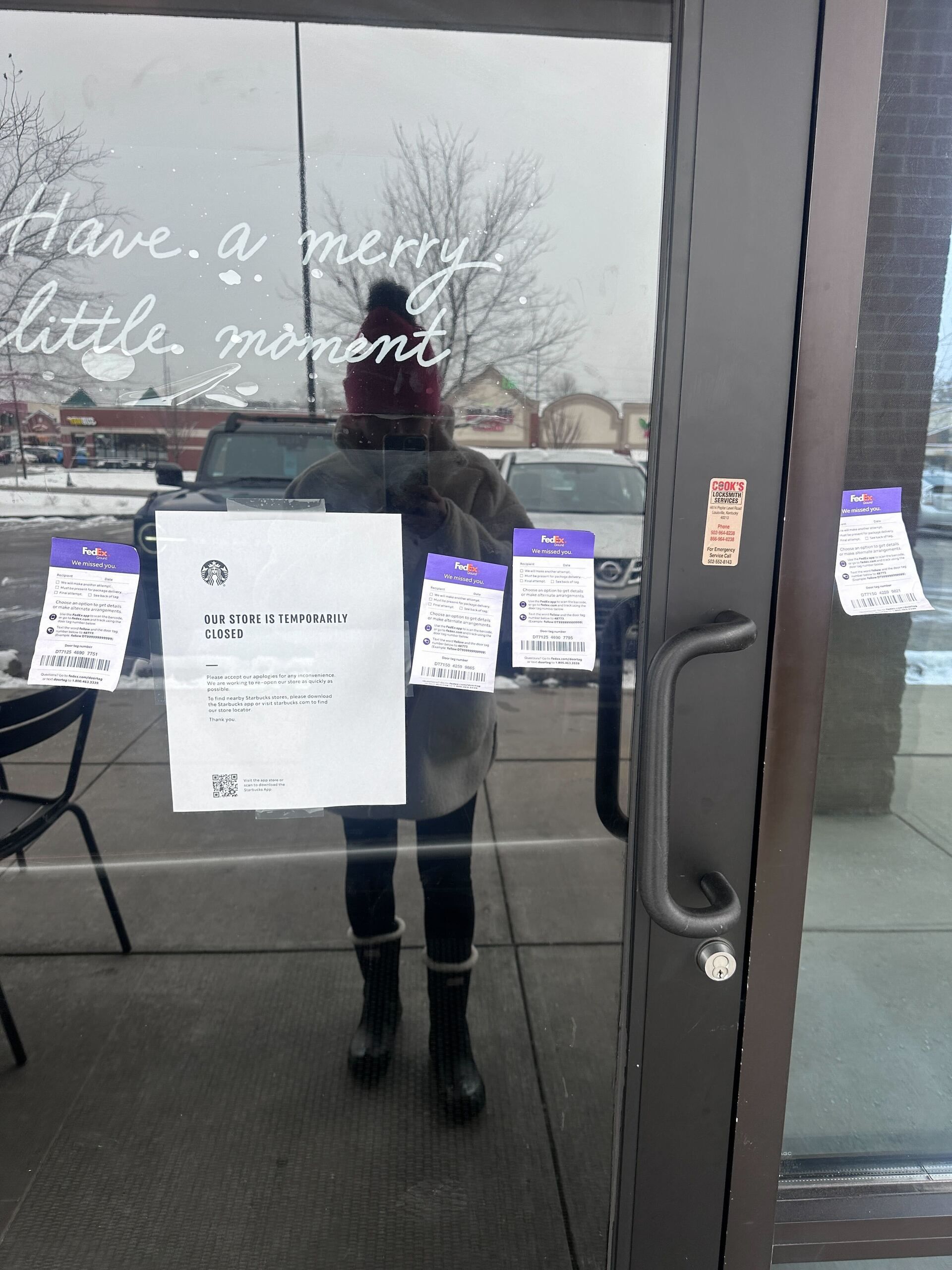
The most visible sign of trouble for Starbucks isn't on a financial statement, it's on the front door.
Nationwide labor conflicts, including localized strikes that have shut down stores from Chicago to our very own neighborhood in Louisville, are having a devastating impact on brand sentiment.
We saw this firsthand when a local Starbucks near our office was unexpectedly closed. This ever-more-prevalent inconvenience for customers is a visible fracture in the brand experience.
The sentiment surrounding these strikes is simple: frustration and repulsion.
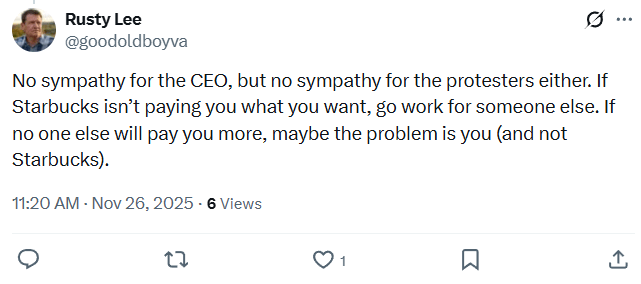
The core consumer reaction is an avoidance strategy that bypasses the retailer entirely. They see conflict, inconvenience, and inconsistency, and they simply go somewhere else to get their morning fix.
A closed door is a powerful and very immediate repellent for demand.
Competition is Getting Caffeinated
The old argument that Starbucks is immune because it occupies the "third place" between work and home is rapidly dissolving.
The competition isn't just the local hipster roastery anymore; it’s a wave of well-funded, rapidly scaling chains that offer compelling value and—crucially—better, faster experiences.
Take Luckin Coffee (China’s answer to the coffee giant), which just opened its first stores in NYC, adding a formidable global competitor right into Starbucks’ home court. As reported in the Wall Street Journal earlier this year, Luckin is focused on aggressively low pricing and speed, an existential threat to Starbucks' high-priced, high-friction model.
Then there’s Dutch Bros (BROS), which continues its aggressive, nationwide expansion with an emphasis on drive-thru convenience and a highly enthusiastic, almost cult-like customer experience.
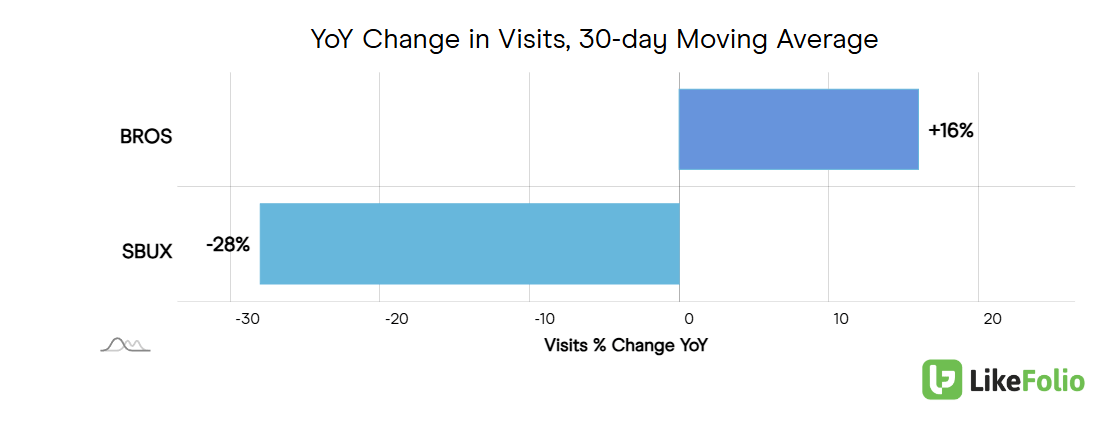
These established chains offer better service and, often, lower prices—a potent combination that drains demand directly from Starbucks’ veins.
The Data is Abysmal: The Worst Holiday Season Ever
The real story, however, is in the numbers we track. The holidays are historically the golden quarter for Starbucks, driven by seasonal lattes and collectible cups.
Management did manage to spin its Q4 2025 report (ending Sept. 28) as a win, touting its first positive global comparable sales (+1%) in seven quarters.
However, this small gain was driven by international growth; North America sales were flat, transactions declined, and non-GAAP operating margin contracted by 500 basis points due to higher labor investments.
Management expressed confidence in an "iconic" holiday season, but our data is calling the bluff.
Our data for the current holiday season shows SBUX facing the most abysmal demand we have ever tracked for them during this critical period. Starbucks is barely registering on demand charts, a shocking low given the time of year.
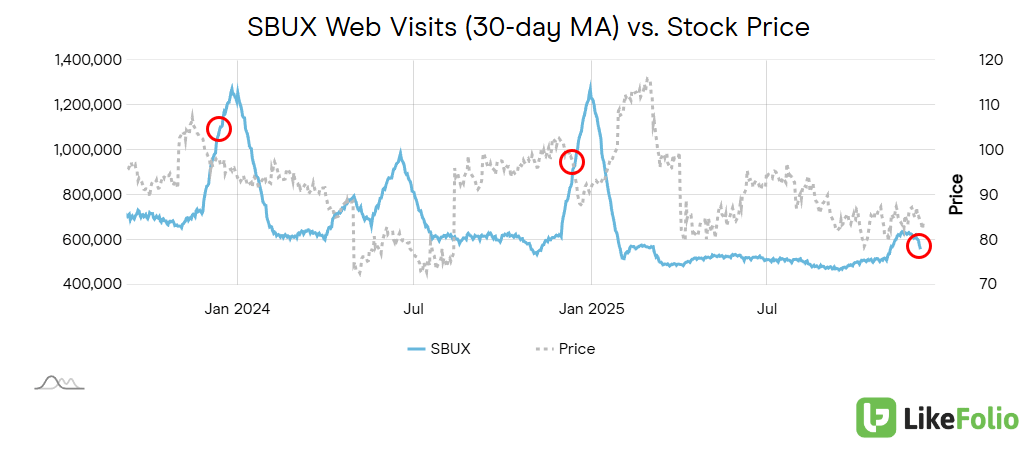
Meanwhile, competitors like Luckin and BROS continue to chug away with steady, positive momentum, capitalizing on the consumer sentiment shift.
If you thought the SBUX bar was low, data suggests the coffee chain may still sneak underneath it.
The Bottom Line
While Niccol is a great operator, fixing Starbucks is less about perfecting the app and more about mending a fractured brand image and fighting a two-front war against both internal labor issues and external, highly competitive chains.
If you’re betting on a turnaround, our data suggests you’re going to have to wait a little longer.
We've done a great job of picking some early holiday winners this year, but knowing when to stay out of trouble is just as valuable.
The consumer is voting with their feet and their wallets, and for now, the coffee giant is still out of favor.