The Strait Doesn’t Matter Anymore
The Islamabad talks collapsed. The Navy is blockading Iranian ports. Oil is above $100. And the market is flat.

Andy Swan
April 13, 2026
Islamabad talks collapsed. Navy blockade went live this morning. Oil above $100.
And the market... is flat.
Read that again.
The Strait of Hormuz has effectively zero traffic. A two-week ceasefire expires April 22 with no extension. Iran’s parliament speaker told Trump: "If you fight, we will fight."
The S&P barely moved.
That tells you everything about where power is shifting.
The Chart That Explains Everything
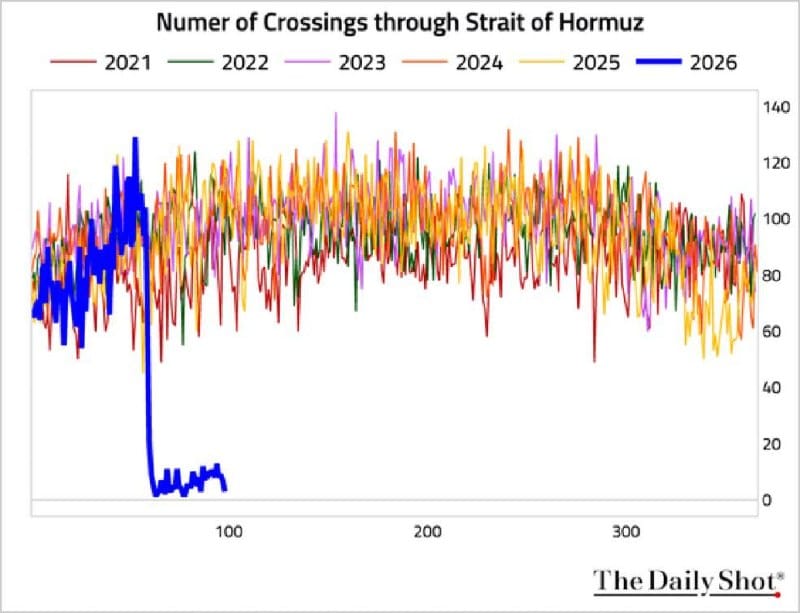
That blue line is 2026. Hormuz crossings went from 80-120 ships per day... to zero.
Ten years ago, that crashes the global economy. Governments fall. Gas hits $8.
Today? U.S. markets are flat. And that one data point tells you more than any headline.
Let’s Be Clear: The Strait Still Matters
We’re not saying Hormuz is irrelevant. It’s devastating for Iran... their economy depends on oil exports flowing through that chokepoint. It matters enormously for countries that import through the Gulf... Europe, Japan, South Korea, India.
And it matters for specific commodities we’ve been tracking. We wrote about the helium trade last week... Qatar supplies 25% of global helium through Hormuz. That supply chain is still disrupted.
The Strait matters. A lot. For a lot of the world.
But for U.S. stocks? The market has priced in $100 oil. And America is gaining power because of it.
America Replaced Iranian Supply
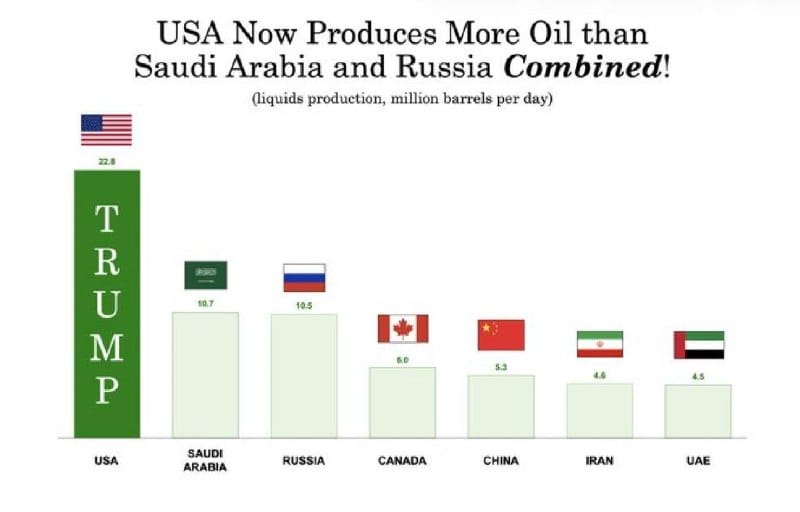
The United States now produces 22.8 million barrels per day. More than Saudi Arabia and Russia... combined.
The country that spent 50 years terrified of Middle East oil disruptions now outproduces the entire Middle East.
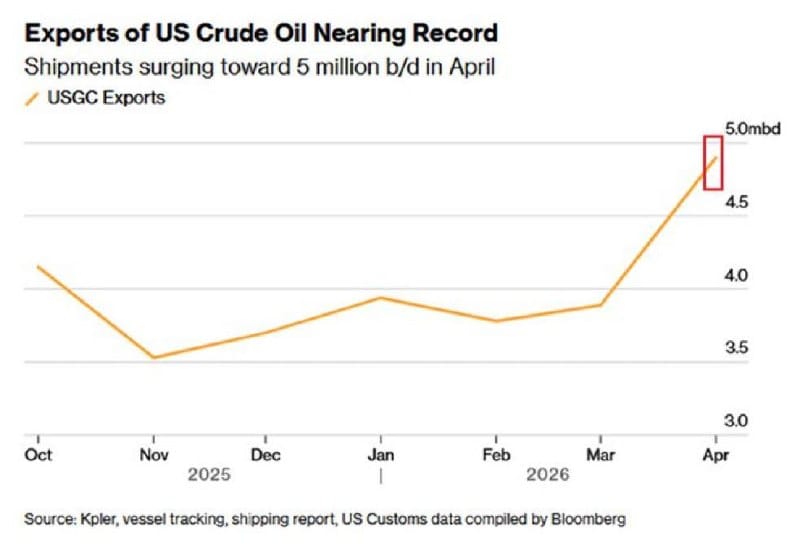
U.S. crude exports are surging toward 5 million barrels per day this month... nearing an all-time record. American oil is flooding global markets at the exact moment Iranian oil is being cut off.
That’s why the market is flat. The world didn’t find a workaround. It found a replacement. Us.
The Gulf of America Is the New Energy Hub
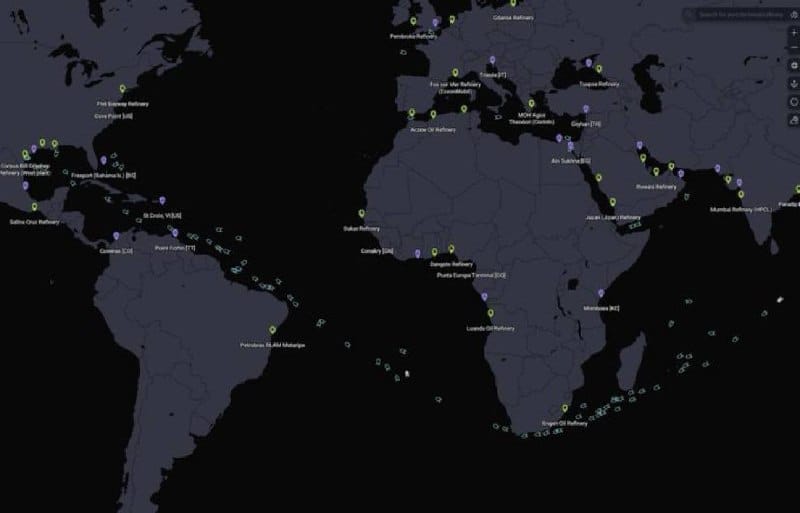
Look at the tanker traffic. Ships aren’t sitting idle waiting for Hormuz to reopen. They rerouted... through the Gulf of America, around the Cape, through West Africa.
The center of gravity for global energy has shifted. Not temporarily. Structurally.
The Gulf of America... not the Persian Gulf... is where the world gets its oil now. Corpus Christi. Houston. Louisiana. Record volumes. Full capacity. Every day the Strait stays closed, the new routing gets more permanent.
America isn’t just energy independent. It’s becoming the world’s energy supplier. And this crisis is accelerating the transition.
What This Means for Your Portfolio
U.S. stocks have priced in oil at $100. The panic trade is over. Now the question becomes: which names were unfairly punished by war fear?
We called this with Norwegian Cruise Line (NCLH) two weeks ago. Oil was the lid, not the fundamentals. NCLH jumped 9% the day after we published.
Same logic applies broadly now.
Airlines. Consumer discretionary. Travel. These sectors got crushed because investors assumed a global energy crisis. For America... it didn’t happen. We produce enough oil to backstop the world.
Meanwhile... the U.S. energy dominance winners:
Refiner margins expanding as U.S. processors capture the spread between domestic crude and expensive global benchmarks
Export infrastructure benefiting from record 5M b/d flowing through Gulf of America terminals
The consumer keeps spending. We’ve been saying this for weeks... the K-shaped consumer doesn’t stop traveling or subscribing because of a war in the Persian Gulf. Not when domestic production keeps gas prices manageable.
The April 22 Question
Ceasefire expires in 9 days. No deal. No framework. No extension.
Here’s the thing... for U.S. stocks, both outcomes point the same direction.
If the ceasefire holds and extends... oil drops, risk assets rally, the war premium unwinds. Great for the names we like.
If it collapses and things escalate... the Strait stays closed, but America keeps pumping 22.8 million barrels a day at record export levels. The rerouting is done. The world adapted. And U.S. energy dominance only accelerates.
The rest of the world has a problem. America has an opportunity.
Bottom Line
The biggest story today isn’t the blockade.
It’s the market’s reaction to the blockade.
Flat.
The Strait of Hormuz still matters... for Iran, for Europe, for helium, for global shipping. But for U.S. equities? The market is telling you it’s priced in. America filled the gap. The Gulf of America is the new center of global energy.
The stocks that were priced for an American energy crisis that didn’t arrive? Those are buying opportunities.
Position accordingly.